Five pages, two very different price tags
What a website redesign really costs for a service business, and what you're paying for.

Jessie Borgmann
Founder, Dotted Octopus

"I need a five-page website. What does that cost?"
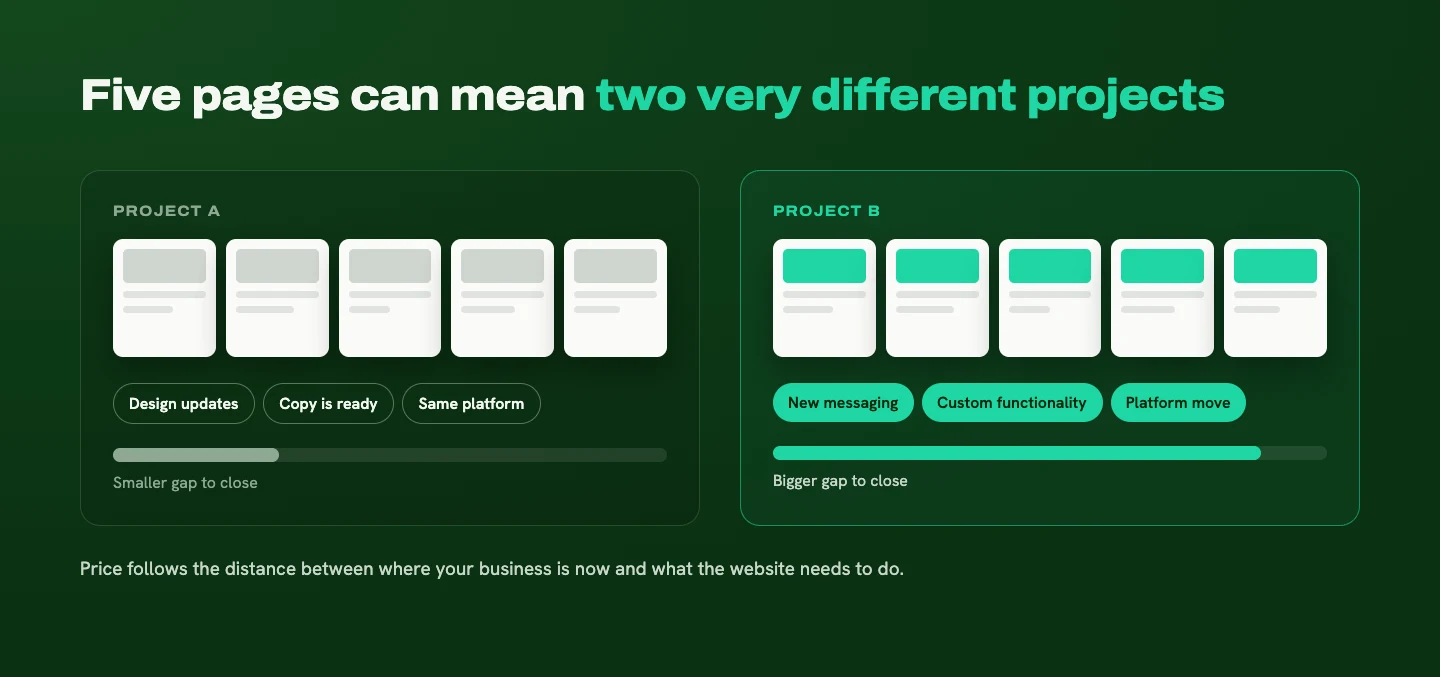
It's a fair question, and one of the first ones business owners ask. The real answer is that "five pages" doesn't tell me enough yet. Those five pages might need straightforward design updates. Or they might need new messaging, custom functionality, and a move to a new platform. Same page count, very different projects.
The biggest factor in how much a website redesign costs is how much work it takes to get from where your business is now to what your website needs to accomplish. Once you understand what fills that gap, comparing quotes gets a lot easier. Here's what drives the price, what people forget to budget for, and how to spot a quote that leaves out the important parts.
What drives the cost of a website redesign
Page count matters, but complexity and how ready your content is can matter more. Five pages with custom layouts and unfinished copy can take more work than ten pages built from established templates.
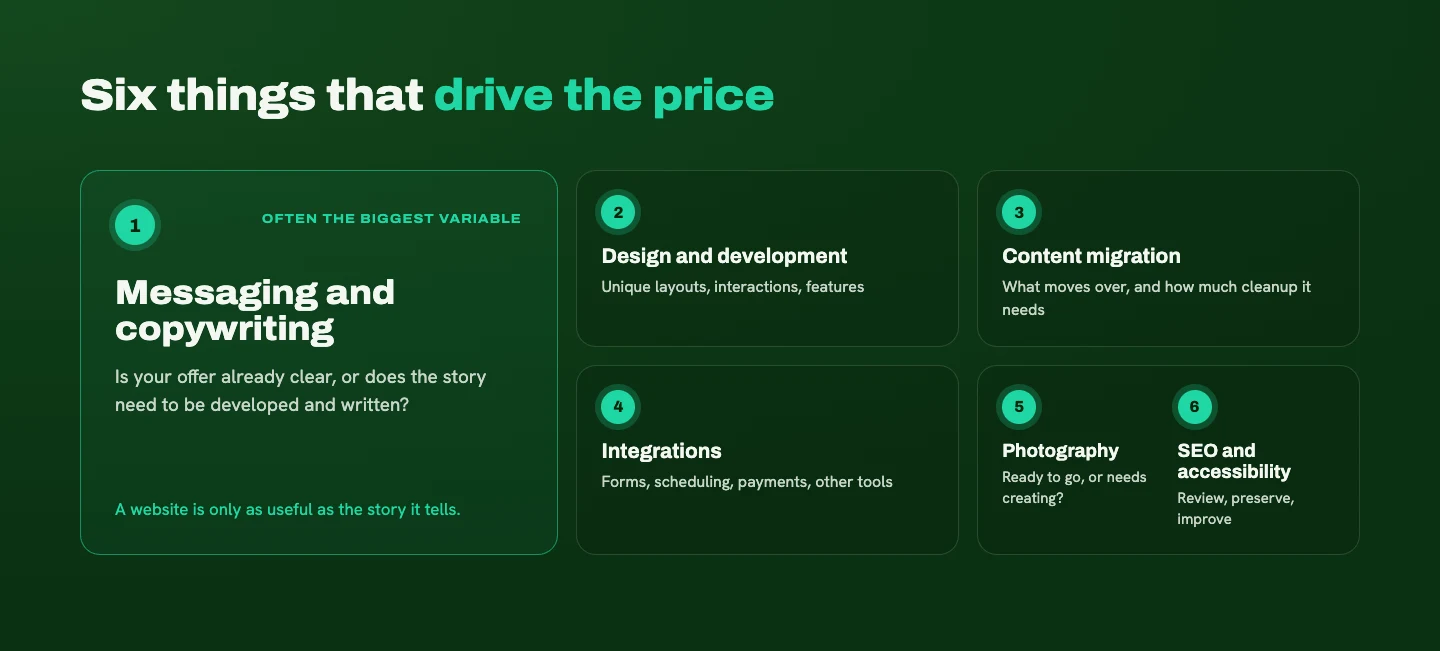
These are the main cost drivers I look at:
- Messaging and copywriting. Is your offer already clear, or does the story need to be developed and the content written? This is often the biggest variable, and the most important one. A website is only as useful as the story it tells.
- Design and development complexity. How many unique layouts, interactions, and features does the site need?
- Content migration. What needs to move from your current site, and how much cleanup does it need along the way?
- Integrations. How will forms, scheduling, payments, or other tools connect to the site?
- Photography and visual assets. Is suitable imagery ready to go, or does it need to be created?
- SEO and accessibility work. What needs to be reviewed, preserved, or improved so the site works for search engines and for every visitor?
One note on timing: how quickly you give feedback mainly affects the schedule. Changes in direction, added requests, and extra rounds of revisions are what tend to affect the price.
A $500 website builder vs a custom quote
When a website builder sits next to a custom quote, the gap can look hard to explain. The useful comparison is what each option includes.
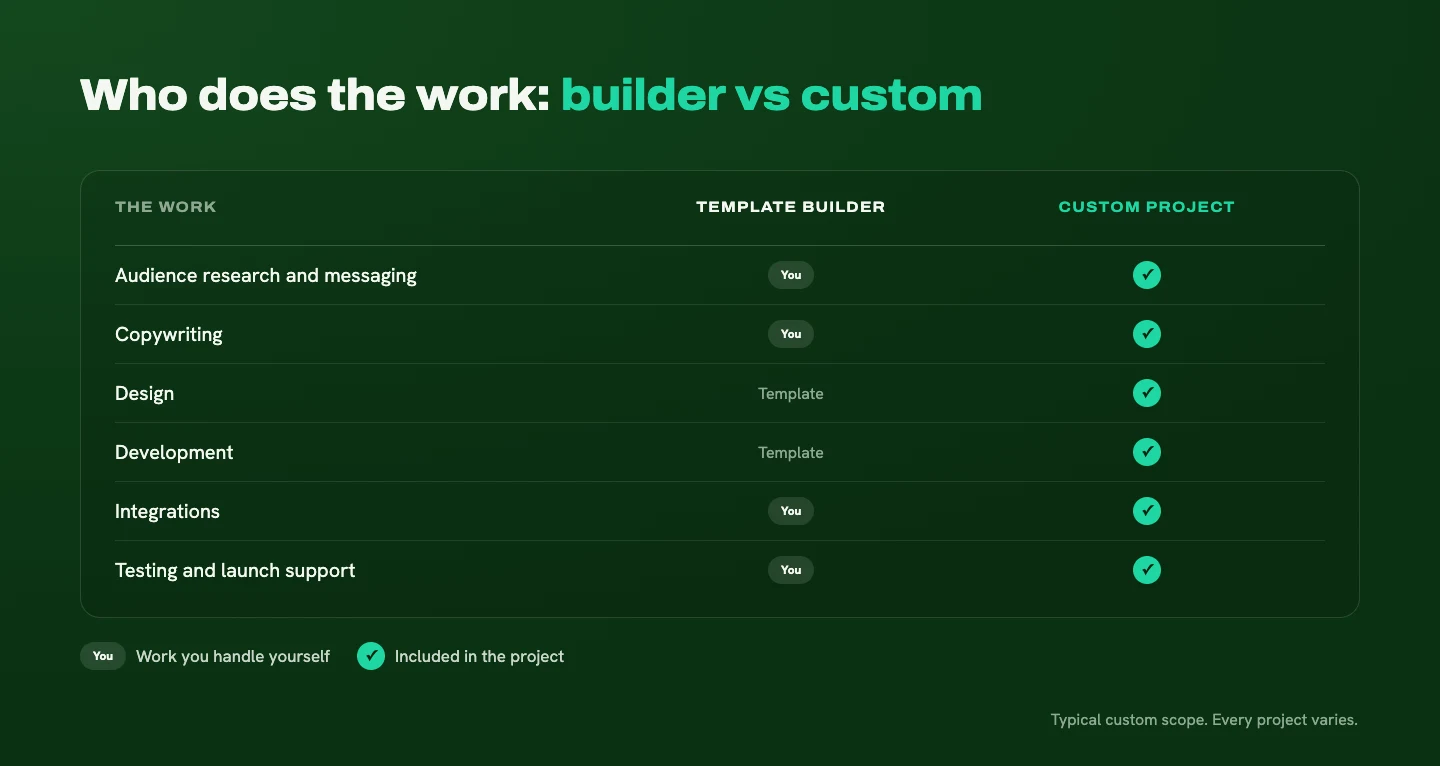
A lower-cost builder or template-based service can be a practical way to get online. It works best when you already have clear messaging, ready-to-use content, and straightforward needs. In that case, you're doing much of the strategic work yourself, and the template gives it a home.
A custom project may include audience research, messaging, copywriting, original design, development, integrations, testing, and launch support. You're paying for the thinking and execution that make those pieces work together.
For my projects, that means combining design and strategy to tell your business's story, communicate its value, and create a clear path toward an inquiry. The visual design has something meaningful to say because the story came first.
The right choice depends on what your business needs and how much of the work you want to handle. Both options deserve to be judged on their actual scope, not just the number at the bottom.
Costs people forget to budget for
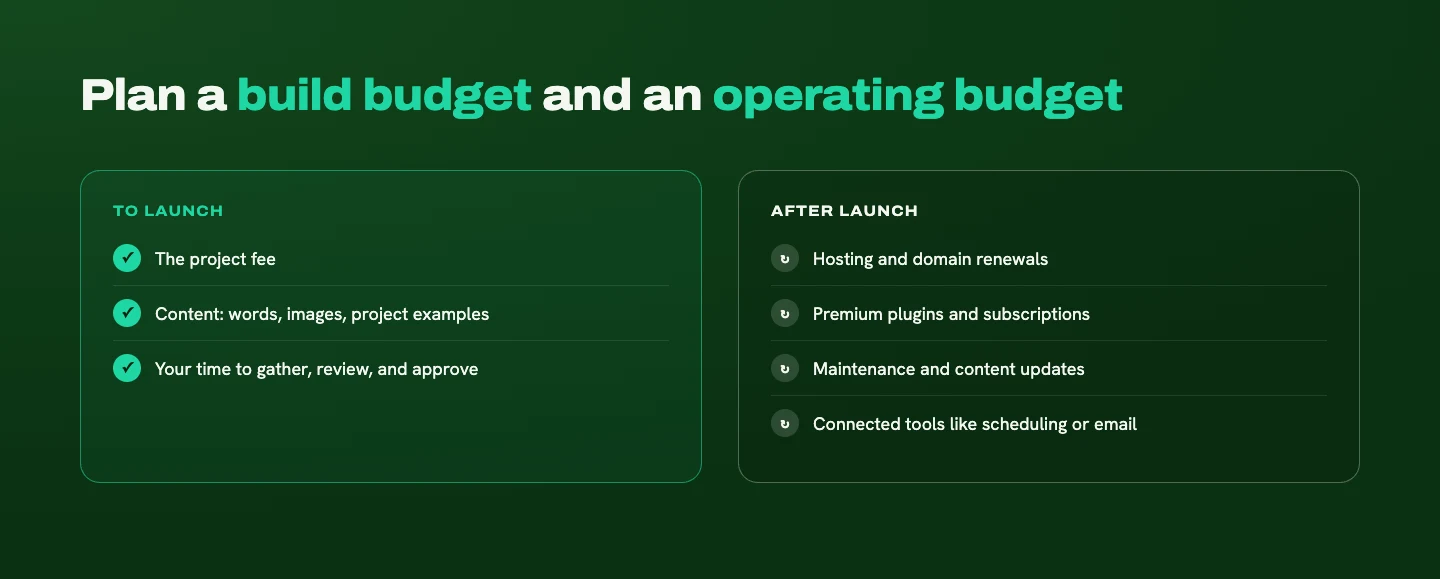
Content is the big one. A website needs words, images, and project examples, and someone has to produce them. If the plan is "we'll write it ourselves," budget the time it takes to do that well.
Other costs to plan for:
- Hosting and domain renewals
- Premium plugins and software subscriptions
- Maintenance and ongoing content updates
- Fees for connected tools, like scheduling, email marketing, or ecommerce
Then there's your own time: gathering materials, answering questions, reviewing work, and coordinating approvals.
Before a project starts, I clarify what's included in the project fee, what's optional, and what continues after launch. Your website needs an operating budget as well as a build budget.
What to have ready before asking for a website quote
You don't need a perfect brief. A few clear answers will make any estimate more accurate:
- What does your business offer, and who do you want to reach?
- What should the website help you accomplish?
- What's frustrating about your current site?
- Which pages and features do you need?
- What content, brand assets, and photography already exist?
- Which tools need to connect?
- Who will approve the work and maintain the site?
- What budget range and launch date are you working toward?
One more thing that helps more than people expect: share the questions customers ask before they buy. Those questions show what your website needs to explain and where it needs to build trust. In other words, they're the outline of the story your site should tell.
If you have an existing site, share the URL and any traffic or inquiry data you have. That gives the estimate a stronger foundation than visual inspiration alone. (For the bigger planning picture, see Before you redesign: 7 questions to answer first.)
When the budget doesn't match the wish list
This happens all the time, and it's a solvable problem. I bring the conversation back to priorities:
- What needs to work better first?
- What can wait?
- What would make the first investment useful on its own?
A phased approach might start with the homepage, core service pages, and inquiry process, then add more content or features later. A website refresh can make sense when the existing foundation is sound.
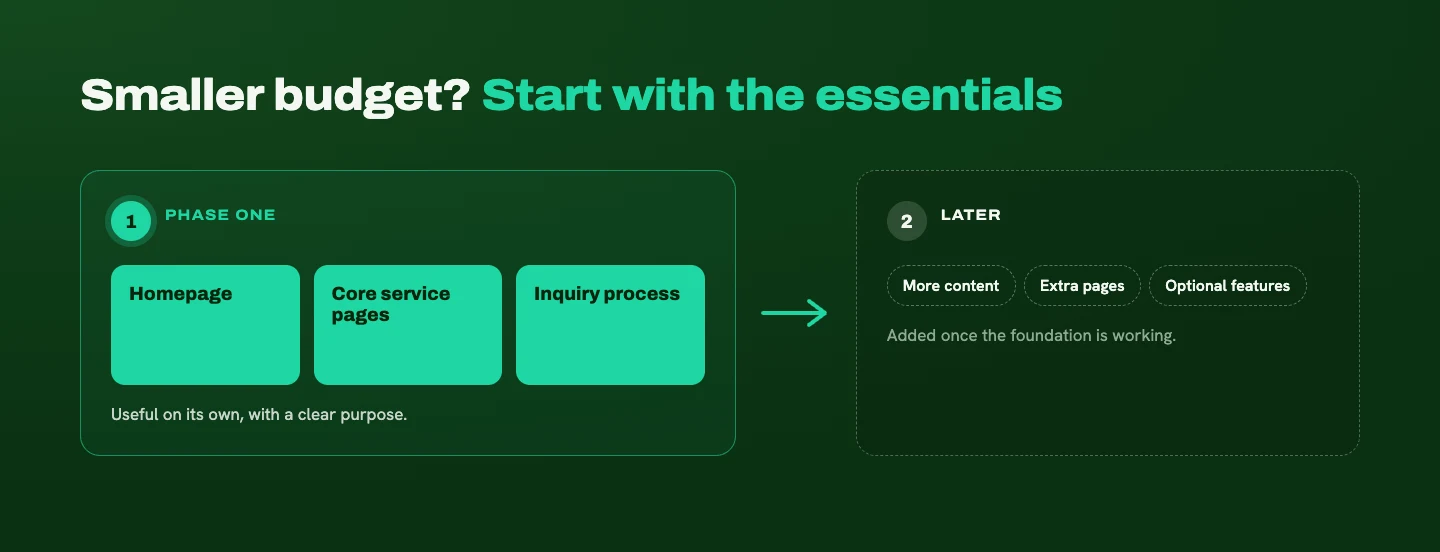
But I won't recommend a refresh just because it costs less if the structure and messaging need rebuilding. That can mean paying for work you'll soon replace. (Here's how I think about refresh vs redesign.)
The goal is a smaller, coherent scope with a clear purpose. Sometimes that also means a simpler design approach or postponing an optional feature.
Where to spend, and where to save
People tend to overspend on features before establishing why they need them: elaborate animation, custom functionality when a simpler option would do, or extra pages without useful content to fill them. They can also spend too much on a full rebuild when focused improvements would solve the problem.
Where I'd be careful about cutting too far is the message, the content, and the customer experience. A beautiful website still needs to explain the offer, show credible proof, and make taking action comfortable.
Storytelling belongs in that investment. Visitors need to recognize their situation and understand how your business can help. That connection is what gives the visual design something meaningful to communicate. Cut it, and you end up with a polished site that doesn't say much.
Red flags in a web design quote
Look for missing detail before judging the price. A useful quote explains the scope, deliverables, responsibilities, timeline, payment terms, and how changes are handled.

Questions worth asking:
- Does "five pages" include copywriting, or just placing text you supply?
- Are mobile layouts and testing included?
- How many rounds of revisions are covered?
- What happens to your existing content and URLs?
- Who owns the domain, accounts, content, and finished work?
- Which ongoing fees will you pay?
- What support is included after launch?
Be cautious about:
- Guaranteed rankings or leads. Google itself says no one can guarantee a #1 ranking, and advises finding someone else if an SEO promises first place (Google Search Central).
- Vague promises to "do SEO" with no explanation of what that includes.
- Unclear ownership of your domain, accounts, or content.
- Expensive extras that haven't been connected to a business need.
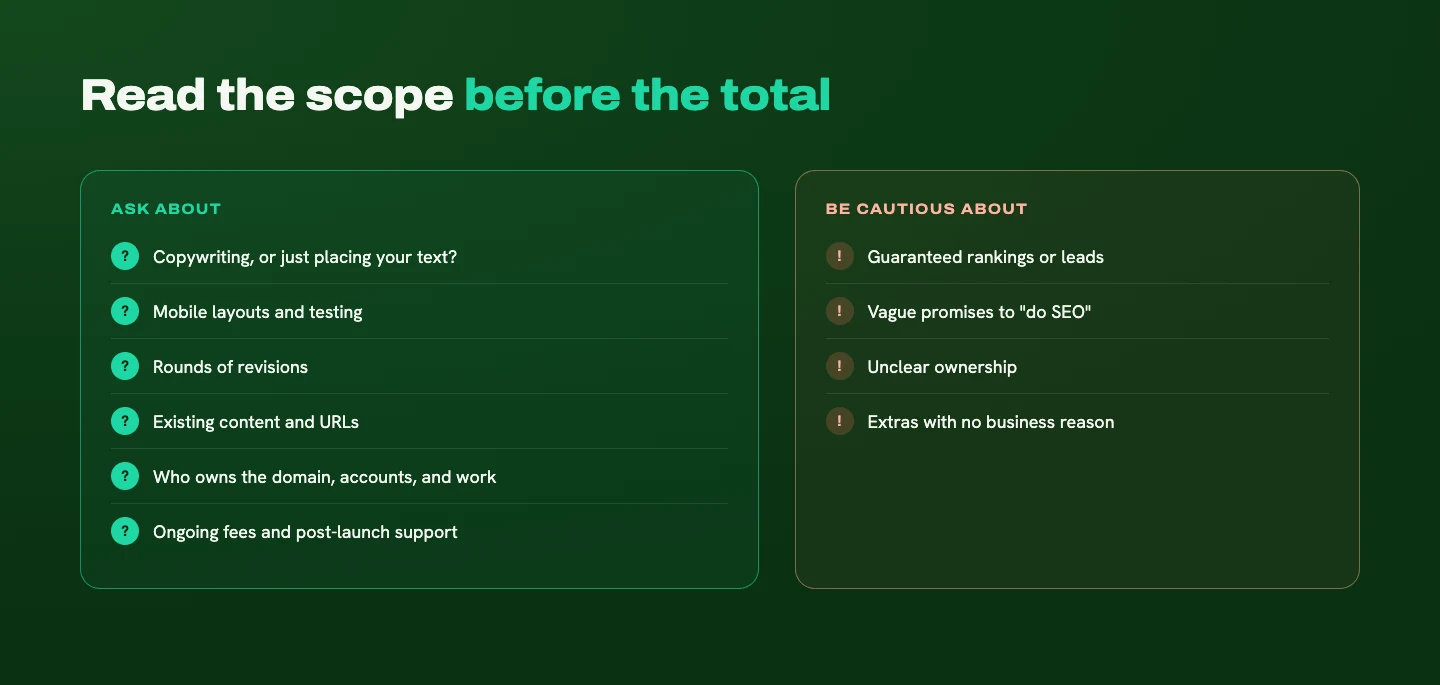
A good proposal helps you understand the decisions you're making. You should be able to explain what you're buying, what you need to contribute, and what happens next.
Budget for the story, not just the pages
The cost of a website redesign comes down to the distance between where your business is now and what your website needs to do. Page count is part of it. The bigger factors are usually whether your story is clear, whether your content is ready, and how much the site needs to do behind the scenes. Compare quotes on scope, not just the total, and protect the investment in your message. That's the part visitors remember.
If you'd like a clearer picture of what your redesign would involve, share a little about your business and your current site. I'll walk you through what I'd recommend and what affects the investment, so you can compare your options with confidence.
Ready for a website that makes this easier?
Tell me about your business and your goals. I'll help you figure out what your website needs to say, and how to make it clear.
Start Your ProjectLiked this one? Get the next article in your inbox.
Your website should work as hard as you do. Each new article shows you where yours is quietly losing leads, trust, or attention, and exactly what to fix. It lands in your inbox the day it's published, and you can unsubscribe whenever you like.
You're on the list. Thanks for subscribing!
Something went wrong. Please try again in a moment.

A strategy-led design studio creating clear, thoughtful websites for B2B and professional-service businesses.
Start Your ProjectDotted Octopus
© 2026 Dotted Octopus. All Rights Reserved.
Back to top ↑